Participatory development of projects for the Green Climate Fund
The first regional writing workshop for the development of adaptation projects for the Green Climate Fund has taken place in Benin. Participants from three countries drew up initial concepts for financing applications.
The town of Grand-Popo in Benin hosted the first regional writing workshop for the development of concept notes for the Green Climate Fund (GCF) in February 2019. During the five-day workshop, participants from Benin, Senegal and Burkina Faso fine-tuned the development of concepts for projects to adapt to climate change and its consequences. Representatives of GCF-accredited national institutions, sector ministries, civil society and national focal points for the GCF worked together with scientists and international experts on five project ideas. The workshop was organised by the Beninese Ministry of Living Environment and Sustainable Development (MCVDD) and the IKI project, ‘Science-based support for the National Adaptation Plan (NAP) processes in francophone Least Developed Countries (LDCs) of sub-Saharan Africa’.
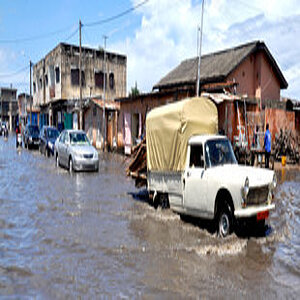
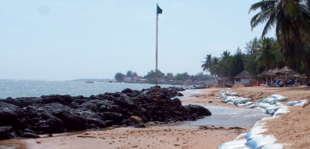
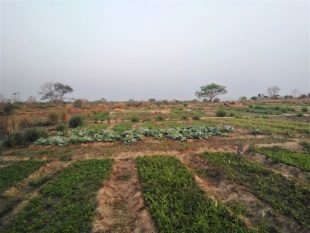
The LDCs of francophone sub-Saharan Africa are already feeling the impacts of global climate change. Agriculture, one of the most important economic sectors in these countries, is being increasingly exposed to droughts, heat waves, storms and floods caused by heavy rainfall. Other sectors like health and fisheries are also being noticeably affected by climate change. Malaria and cardiovascular diseases are becoming more widespread due to the increases in temperature and humidity, while coastal zones – crucial for local fishing industries – are being threatened by rising sea levels and storms.
 Countries must develop effective adaptation strategies to cope with these changing conditions – but all too often, no money is available to implement the necessary measures. This is why the Green Climate Fund (GCF) was created in 2010. This international fund supports developing countries in minimising greenhouse gas emissions and adapting to climate change – and the fund’s particular focus is currently on the LDCs. The GCF is one of the few financing mechanisms to which countries have direct access through their national GCF-accredited entities which can independently submit project proposals for funding.
The projects must nevertheless meet certain requirements to receive financial support from the GCF. For example, a clear link must be established between the challenges to be tackled and climate change, the so-called ‘Climate Rationale’ – and a sufficient amount of scientific data is necessary to establish this link. This was again clearly demonstrated in a presentation given by the GCF at the beginning of the workshop and the participants were able to address their questions to the GCF representatives.
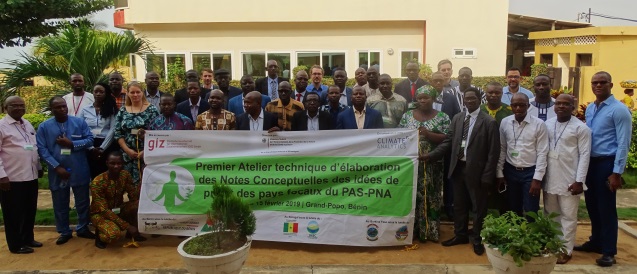
During the five-day writing workshop in Benin, the representatives of the three countries were supported by international and national experts for the GCF, who helped them to meet the specific requirements for the preparation of funding proposals. The focus here was on the development of adaptation projects to be submitted under the Simplified Approval Process (SAP), a simplified GCF process aimed at enabling the LDCs to submit financing applications more quickly and cost-effectively. Five project ideas had previously been identified in the countries through idea competitions and the analysis of financing gaps.
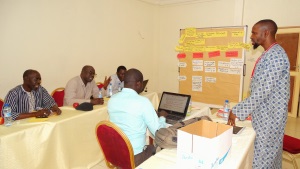 As a first step, the participants worked out the Climate Rationale, highlighting the various measures necessary for a successful adaptation strategy. The individual steps were preceded by introductory lectures given by the experts. After the groups had worked out the individual sections of the concept note, the results were discussed by all the participants and experts, enabling the participants to learn from the other projects and to get ideas for their own projects.
At the end of the workshop, the individual project groups identified the information that is still needed to complete the concept note. The concepts of the projects will be completed in a second workshop in Senegal in Mai 2019.
The link has been copied to the clipboard
Contact
IKI Office
Zukunft – Umwelt – Gesellschaft (ZUG) gGmbH
Stresemannstraße 69-71
10963 Berlin